Skip to Content

Spirometry

A vital test for lung health that measures how much air you can inhale and exhale, as well as how quickly you can empty your lungs. It is the primary tool used to diagnose and monitor conditions like asthma or COPD.


Assessing Your Respiratory Vitality

Our Spirometry service is a cornerstone of pulmonary care, providing essential data on how effectively your lungs are functioning. This non-invasive test measures the total volume of air you can inhale and exhale, as well as the speed at which you can clear your lungs. By capturing these precise measurements, we can accurately diagnose and monitor chronic respiratory conditions—such as asthma and COPD—allowing us to refine your treatment and ensure you are breathing as easily and deeply as possible.

Understanding Spirometry: A Deep Dive into Lung Health

To provide more value to your website visitors, here is an expanded look at why this test is so important for respiratory wellness:

Why Spirometry is Essential

Lung function can often decline so gradually that you might not notice it in your daily life. Spirometry provides an objective "score" for your lungs, much like a blood pressure reading does for your heart. It is the primary tool used to:

  • Differentiate Symptoms: Determine if shortness of breath is caused by a lung condition, heart issues, or general physical deconditioning.

  • Track Chronic Conditions: Monitor how well your lungs are responding to medications or lifestyle changes.

  • Occupational Health: Check if your lungs are being affected by environmental factors, such as dust or chemicals in the workplace.

The Key Measurements

During the test, we focus on two primary numbers:

  • Forced Vital Capacity (FVC): This is the largest amount of air that you can forcefully exhale after breathing in as deeply as you can. A lower FVC indicates restricted breathing.

  • Forced Expiratory Volume (FEV1): This measures how much air you can force out of your lungs in one second. This helps us see if there are obstructions in your airways, common in conditions like asthma.

What to Expect During the Test

The process is straightforward and usually takes less than 15 minutes:

  1. Preparation: You will sit upright and a small clip will be placed on your nose to keep your nostrils closed.

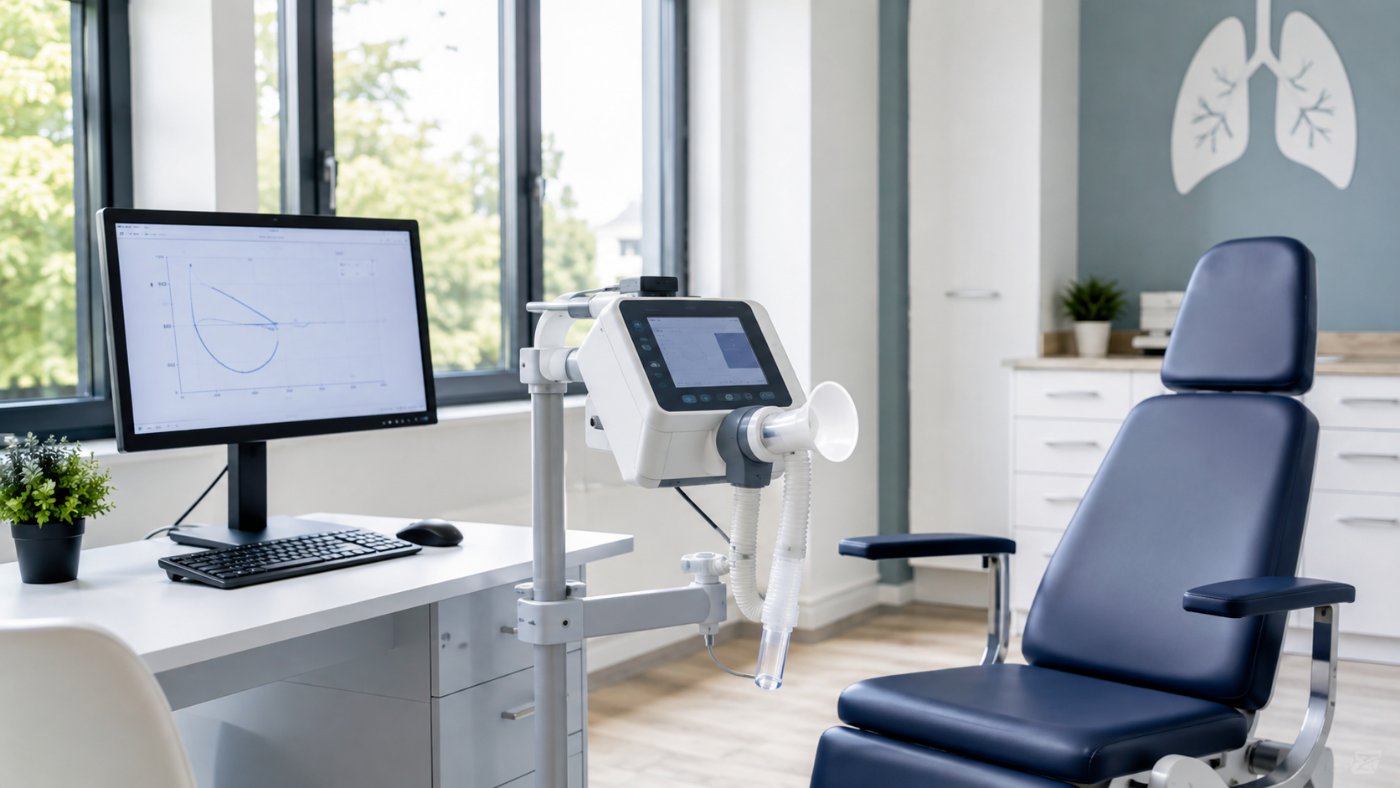
  2. The Breathing Maneuver: You will take a deep breath and exhale as hard and fast as you can into a tube connected to a machine called a spirometer.

  3. Consistency: You’ll typically repeat the test three times to ensure the results are consistent and accurate.

  4. Instant Feedback: In many cases, our specialists can review the data with you immediately to discuss your lung health.