ECG / Long-Term ECG
Electrocardiogram (ECG) services track the heart's electrical activity. While a standard ECG provides a snapshot of heart health, long-term monitoring (such as a Holter monitor) records heart rhythms over 24 hours or more to catch irregularities that occur during daily activities.
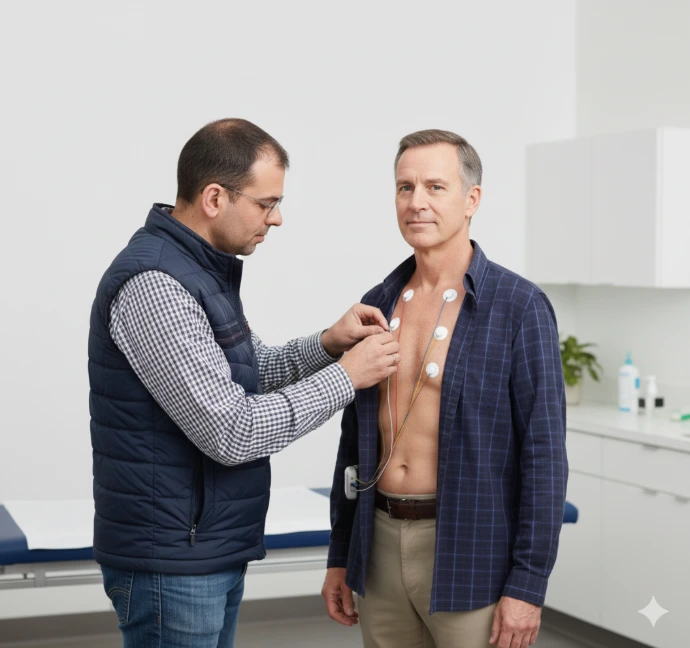
Comprehensive Heart Rhythm Analysis
Our ECG and Long-Term ECG services offer a detailed window into your heart’s electrical health. While a standard electrocardiogram provides a vital snapshot of your heart at rest, many irregularities only appear during the stresses and movements of your daily life. By utilizing advanced long-term monitoring—such as Holter monitors—we can record your heart’s rhythm over 24 hours or more. This continuous tracking is essential for capturing transient symptoms and infrequent arrhythmias, ensuring that even the most elusive cardiac patterns are identified for an accurate diagnosis and a tailored care plan.
Understanding ECG vs. Long-Term Monitoring
To help your patients understand which service they might need, here is a deeper dive into these diagnostic tools:
The Standard ECG: The Vital Baseline
A standard ECG is a quick, non-invasive test that records the electrical signals in your heart. It is the gold standard for a first-line assessment because it can instantly show:
Heart Rate and Rhythm: Whether your heart is beating too fast, too slow, or irregularly.
Heart Attack Evidence: Signs of previous heart damage or an ongoing event.
Structural Abnormalities: Clues regarding thickened heart walls or chamber enlargement.
Why Go Long-Term? (The Holter Monitor)
Some heart symptoms are like "ghosts"—they come and go unexpectedly. If you experience palpitations, dizziness, or chest pain that doesn't happen while you are sitting in the doctor's office, a Long-Term ECG is necessary.
24 to 72 Hour Tracking: The device stays with you as you work, exercise, and sleep.
Symptom Correlation: You can press a button or keep a diary when you feel a symptom, allowing the doctor to see exactly what your heart was doing at that precise moment.
Catching "Silent" Issues: It can detect arrhythmias like Atrial Fibrillation (AFib) that might occur briefly without you even feeling them.
How it Works: Seamless & Painless
Placement: Small, sticky sensors (electrodes) are placed on your chest and connected to a lightweight, portable recorder.
No Interruption: The device is small enough to be worn under your clothes, allowing you to go about your day as usual.
Detailed Reporting: Once the monitor is returned, our specialists analyze thousands of heartbeats to provide a comprehensive report on your cardiac performance.